House Hacking in 2026: The Ultimate Guide to Living for Free
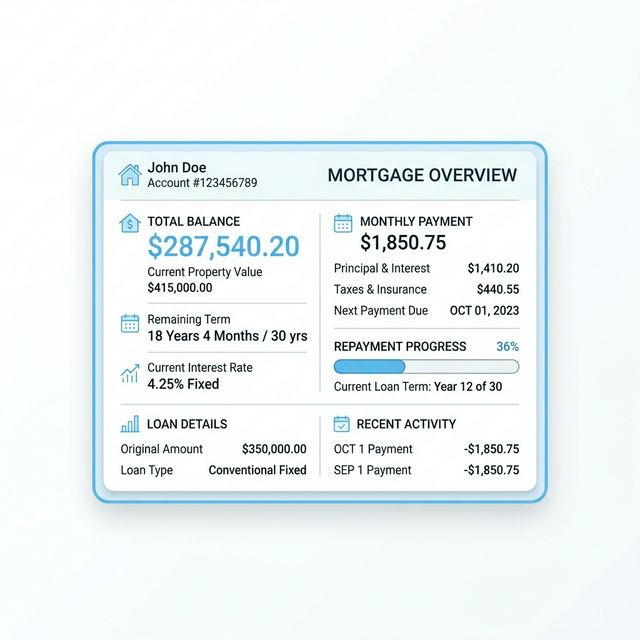
Let's be honest: buying a traditional single-family home in 2026 isn't easy. With elevated property values and stubborn mortgage rates, the monthly payment on a standard starter home can eat up a massive chunk of your income. Enter "House Hacking."
House hacking is the process of generating income from your primary residence to offset (or completely cover) your mortgage and housing expenses. It is arguably the single most powerful wealth-building tool available to young professionals and first-time buyers today.
Why Should You House Hack Now?
The math is simple. If your mortgage is $2,800 a month, but you can generate $2,000 a month by renting out the other side of a duplex, your out-of-pocket housing cost drops to $800. You get to build equity, benefit from appreciation, and enjoy the tax write-offs of homeownership-all while living cheaper than you would be renting an apartment.
Furthermore, as of late 2025 and 2026, Fannie Mae changed the rules allowing buyers to purchase 2-to-4 unit properties with just 5% down instead of the traditional 15-25% required for multi-family homes. This was an absolute game-changer.
What Are the Top 3 House Hacking Strategies for 2026?
What Is the Classic Multi-Family Strategy (Duplex/Triplex/Quad)?
This is the holy grail. You buy a 2, 3, or 4-unit property, live in one unit, and rent out the others.
- Pros: Maximum privacy (separate walls, kitchens, and entrances). Often completely covers the mortgage.
- Cons: High competition. These properties are highly sought after by investors with cash.
What Is the ADU (Accessory Dwelling Unit) Strategy?
With zoning laws relaxing across the country, building or buying a home with a "mother-in-law suite," basement apartment, or detached garage conversion is incredibly popular. You live in the main house and rent the ADU, or vice versa.
- Pros: Adds massive resale value to the property. Great for short-term rentals (Airbnb/VRBO) if local laws permit.
- Cons: Upfront costs to build an ADU can easily exceed $100,000 if not already existing.
What Is Rent-by-the-Room (The Roommate Hack)?
Buy a large 4 or 5-bedroom single-family home and rent out the individual bedrooms to friends, students, or traveling nurses.
- Pros: Easiest to find. Single-family homes are plentiful and usually appreciate faster than multi-family properties.
- Cons: You are sharing your living room and kitchen. You have to be comfortable being a landlord while sharing space with your tenants.
What Is the Financing Cheat Code?
When you apply for a mortgage on a multi-family property, lenders will typically allow you to use 75% of the projected rental income from the other units to help you qualify for the loan. This means you can afford a significantly more expensive (and nicer) property than you could if you were buying a single-family home.
What Is the Reality of Being a Live-in Landlord?
House hacking isn't passive income; it's a part-time job. You are the one who gets the text at 2 AM when the toilet is leaking.
Before you take the plunge, ensure you have strong boundaries. Use property management software (like Avail or Buildium) to handle rent collection and maintenance requests-even if you are living next door. Never let tenants knock on your door to pay rent or complain about a leaky faucet. Treat it like a business from Day 1.
Can You Afford to House Hack?
Use our calculator to see how rental income offsets your monthly mortgage payment and changes your buying power.
What Are the Advanced Strategies for House Hacking in 2026?
With median home prices pushing affordability to its breaking point, "House Hacking" is no longer just a niche real estate trick; it is the most viable path to homeownership for young buyers in 2026. By turning your primary residence into an income-producing asset, you fundamentally alter the math of home affordability.
What Is the 5% Down Conventional Multi-Family Hack?
For decades, buying a multi-family property (2-4 units) required a massive 15% to 25% down payment. However, a recent Fannie Mae policy change now allows buyers to purchase an owner-occupied 2, 3, or 4-unit property with just 5% down using a conventional loan. This is a game-changer. You can buy a triplex, live in one unit, rent out the other two, and use the projected rental income from those two units to help you qualify for the massive mortgage upfront. The tenants essentially pay your mortgage for you.
What Is the ADU (Accessory Dwelling Unit) Strategy?
If buying a multi-family building is impossible in your area, you can create one. As state legislatures desperately try to solve the housing shortage, draconian zoning laws are being dismantled. In many states, you now have the "by-right" legal authority to build an ADU (a backyard tiny home, or a converted garage) on a standard single-family lot. By converting a garage for $50,000 and renting it out for $1,500 a month, you create massive cash flow that offsets your primary mortgage payment while simultaneously skyrocketing your property's total appraised value.
What Is the Rent-by-the-Room Model?
The simplest and lowest-barrier house hack is simply buying a large single-family home (e.g., 4 bedrooms, 2 baths) and renting out the individual bedrooms to roommates on individual leases. In high cost-of-living urban areas, renting a house by the room generates significantly more total revenue than renting the entire house to a single family. This strategy requires strict tenant screening and robust "house rules" built into the lease, but it allows a single earner to comfortably afford a home that mathematically requires dual incomes.
What Are the Most Common Questions About House Hacking?
Do I have to pay income tax on the rent I collect?
Yes, it is considered taxable rental income. However, because you are now operating a business out of your home, you unlock massive tax deductions. You can deduct a proportional share of the mortgage interest, property taxes, utilities, repairs, and most importantly, depreciation on the rented portion of the home. Often, these deductions mathematically wipe out the tax liability of the rental income entirely.
How long do I have to live in the house before moving out?
To legally use a primary residence mortgage (which offers low down payments and lower interest rates), you must sign an affidavit stating you intend to occupy the property for at least 12 months. After that one year is up, you are legally free to move out, rent out your former unit, keep the low-interest mortgage, and repeat the process on a new property.
What happens if my tenants stop paying rent?
This is the fundamental risk of house hacking. You are legally responsible for the full mortgage payment every month, regardless of whether your tenants pay. You must maintain a strict emergency fund (at least 6 months of the full mortgage payment) to survive periods of vacancy or lengthy eviction processes.
Finance & Mortgage Research Team
Based on CFPB, HUD, FHFA & Tax Foundation data
The USFinNexus editorial team researches and writes mortgage and personal finance guides using data sourced directly from the Consumer Financial Protection Bureau (CFPB), the U.S. Department of Housing and Urban Development (HUD), the Federal Housing Finance Agency (FHFA), and the Tax Foundation. All calculator formulas are reviewed for accuracy against official federal guidelines.
Last Updated: May 3, 2026


