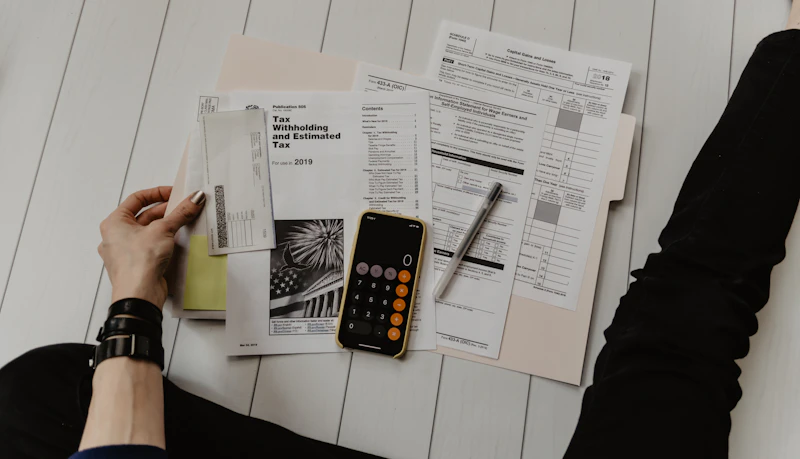
How to Remove PMI in 2026: The HPA Rules You Need to Know
If you bought a house with less than a 20% down payment, you are likely bleeding hundreds of dollars every single month paying for Private Mortgage Insurance (PMI). That is pure profit for the bank, and zero benefit to you.
The bank is perfectly happy to let you keep paying PMI forever if you let them. They are not going to call you up and suggest you cancel it. To stop the bleeding, you have to force their hand using federal law.
That law is the Homeowners Protection Act (HPA) of 1998. The HPA establishes strict, federal guidelines dictating exactly when and how a lender MUST remove PMI from your conventional loan. In this guide, we are going to break down the exact legal thresholds of the HPA and give you the playbook to terminate your PMI as fast as possible in 2026.
The Homeowners Protection Act (HPA) Explained
Before 1998, homeowners had essentially zero rights regarding mortgage insurance. Lenders could arbitrarily refuse to cancel PMI even if the homeowner had paid off half the loan. Congress stepped in and passed the HPA to stop this abuse.
The HPA (often referred to simply as the PMI Cancellation Act) created two incredibly important thresholds based on your Loan-to-Value (LTV) ratio. Your LTV is simply how much you owe divided by the value of the home.
Crucial Limitation: Conventional Loans Only
The HPA only applies to conventional mortgages (loans backed by Fannie Mae or Freddie Mac). If you have an FHA loan or a USDA loan, the HPA does not apply to you. FHA loans have their own brutal rules regarding Mortgage Insurance Premiums (MIP), which frequently last for the entire 30-year life of the loan regardless of your equity.
Rule 1: The 80% LTV "Request" Threshold
Under the HPA, you have the legal right to write a letter to your mortgage servicer and formally request PMI cancellation on the date your mortgage balance reaches 80% of the original value of your home.
This means you have built exactly 20% equity based on the original purchase price.
- 1The Math Example
You bought a house for $400,000 (Original Value). You put down 10% ($40,000), meaning your starting loan balance was $360,000.
80% of $400,000 is $320,000.
The day your loan balance drops to $320,000, you can invoke your HPA rights and request cancellation.
The Lender's Caveats
Just hitting the 80% mark isn't enough; the lender is legally allowed to impose a few conditions before they actually flip the switch:
- Good Payment History: You usually cannot have any 30-day late payments in the past 12 months, or 60-day late payments in the past 24 months.
- No Junior Liens: You cannot have taken out a second mortgage, like a HELOC, on the property.
- Value Verification: The lender is legally allowed to demand evidence that the property has not declined in value since you bought it. They may force you to pay for a Broker Price Opinion (BPO) or a formal appraisal (usually around $150 to $500).
Rule 2: The 78% LTV "Automatic Termination" Threshold
If you never ask the lender to cancel PMI at the 80% mark (because you didn't know you could, or you didn't want to pay for the appraisal), the HPA provides a failsafe.
The lender MUST automatically terminate your PMI on the exact date that your principal balance is scheduled to reach 78% of the original value of your home based on the original amortization schedule.
Automatic termination is triggered by the scheduled amortization date, not the actual date. If you make aggressive extra principal payments and hit 78% LTV five years early, the lender is NOT required to automatically terminate your PMI today. They will wait for the date on the original 30-year calendar. If you pay it down early, you must use the 80% "Request" rule (Rule 1) to force them to acknowledge it.
Rule 3: The "New Value" Appraisal Hack
The strict HPA rules mentioned above rely on the Original Value of the home (the lesser of the purchase price or the original appraisal).
But what if the housing market exploded, and your house appreciated by $100,000 in two years? You might technically have 30% equity today, even though your loan balance hasn't dropped much.
The HPA does not explicitly govern "Current Value" cancellations, but Fannie Mae and Freddie Mac (who own the majority of conventional loans) have standard guidelines that allow you to use a new appraisal to cancel PMI based on market appreciation.
- ALoans aged 2 to 5 years:
If you have had the mortgage for between 2 and 5 years, you must prove you have 25% equity (75% LTV) based on a brand-new appraisal to cancel PMI via market appreciation.
- BLoans aged over 5 years:
If you have had the mortgage for more than 5 years, you only need to prove 20% equity (80% LTV) based on a new appraisal.
- CThe Renovation Exception (Less than 2 years):
If you have owned the home for less than two years, lenders will typically deny a "Current Value" PMI cancellation request... unless you can prove the equity was created by structural improvements you made to the property (like finishing a basement or adding a bathroom), rather than just market inflation.
Step-by-Step: How to Execute Your PMI Cancellation
- Calculate your exact current LTV. Use a mortgage calculator or pull your latest statement to find your exact principal balance. Divide that balance by the original purchase price.
- Call your loan servicer. Do not just stop paying the PMI portion of your bill (they will mark you as delinquent). Call the servicer and say: "I want to initiate a formal request for PMI cancellation based on the 80% LTV rule."
- Request the requirements in writing. The servicer must send you a formal letter outlining exactly what you need to do, including the cost of the required appraisal or BPO.
- Pay for the appraisal (if confident). You will have to pay the $300-$500 appraisal fee upfront. If the appraisal comes back lower than you expected and you don't hit the 20% equity mark, you lose that money and the PMI stays. Be very confident in your home's value before pulling the trigger.
Once the appraisal is approved and the servicer processes the request, your monthly payment will plummet, saving you thousands of dollars over the remaining life of your loan.
Track Your PMI Drop-Off Date
Do not guess when your loan will hit 80% or 78% LTV. Use our Mortgage Calculator to generate a full amortization schedule. It will show you the exact month and year you will hit the legal thresholds for PMI removal.
View Amortization Schedule